
Chambéry neighborhoods: the guide to choosing where to live
Have you just been accepted to the University of Chambéry, or are you preparing for a professional move to Savoie? One question inevitably comes up: which part of the city should you settle in? Between the charm of the historic city center, the peace and quiet of Bissy, and the energy of the upper parts of town, each neighborhood has its own personality. And making the right choice from the start really changes day-to-day life.
Looking for a neighborhood that fits you to find housing in Chambéry? This guide answers all your questions about Chambéry’s neighborhoods: vibe, property prices, transport, and nearby shops and services. We’ll walk you through it step by step to help you find the neighborhood that suits you, whether you’re a student, a young professional, or a parent looking for the whole family.
Key takeaways
Before diving into the details of each neighborhood, here’s a quick summary to save time:
- The city center is the liveliest area, but also one of the more affordable in terms of price per square meter.
- Bissy and Chambéry-le-Vieux appeal to families thanks to their green, peaceful setting.
- Biollay and the Hauts de Chambéry offer lower rents, ideal for a student budget.
- The Laurier neighborhood is great for those who want a balance between nature and city life.
- The Synchro transport network makes it easy to get from each neighborhood to the city center and the university.
- For students, distance to campus and bus lines should weigh as much as price in the decision.
Overview of Chambéry’s seven neighborhoods
The city of Chambéry is made up of seven main neighborhoods, each with its own vibe. Before comparing prices or transport options, it’s helpful to picture where each area sits in relation to the city center and the main routes.
This map of Chambéry’s neighborhoods helps you quickly spot proximity to the university, the train station, or the lake. It’s often the first thing future residents look at before diving into prices or the available housing offer.
City center: the historic and shopping heart
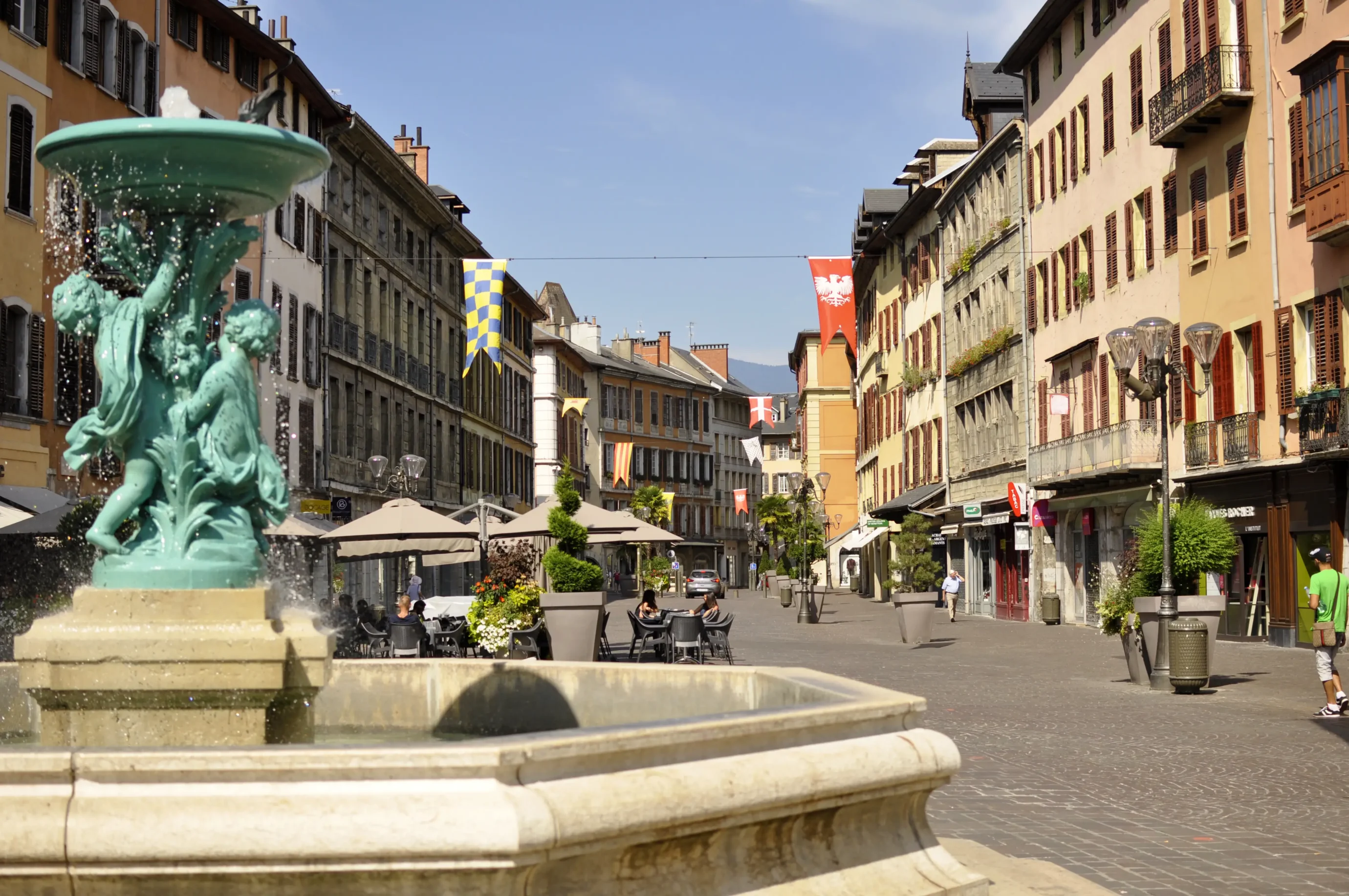
Chambéry’s city center is the city’s postcard. Cobblestone streets, passageways, and the Château of the Dukes of Savoy create a setting steeped in history. This neighborhood attracts both lovers of old-world charm and professionals who want everything within walking distance.
Key points:
- Lively atmosphere with plenty of bars, restaurants, and shops.
- Excellent access to buses and the train station.
- Few parking spots and more urban noise in the evening.
- Rents around the average, despite strong demand.
💡 Tip: if you want to enjoy nights out without walking for miles, this is clearly the neighborhood to choose for your first year.
Bissy: the nature-and-convenience compromise
Located west of the city, Bissy offers a peaceful living environment, surrounded by green spaces and crossed by a cycle path leading to Lake Bourget. It’s a residential neighborhood popular with families.
Key points:
- Central park and green areas to relax.
- Good service via bus lines C and D.
- Fewer local shops than in the city center.
- Quiet setting, far from the bustle of town.
Biollay: the green, affordable neighborhood
Biollay stands out for its tree-lined streets and residential feel. Renovated in recent years, this area offers rents that are more affordable than the historic center, an advantage if you’re on a tight budget.
Key points:
- Parc de la Calamine for outdoor sports.
- Good connection to the urban expressway.
- Few shops right nearby; a car or bike makes everyday life easier.
- Family-friendly, quiet atmosphere.
Hauts de Chambéry: urban renewal
Long somewhat overlooked, the Hauts de Chambéry area is undergoing a real transformation thanks to urban renewal programs. Housing is newer here, and the value for money is appealing for newcomers.
Key points:
- Modern housing from rehabilitation projects.
- Beautiful open views of the surrounding mountain ranges.
- Limited nightlife in the neighborhood.
- Good public transport options to the city center.
Chambéry-le-Vieux: a village feel
Between city and countryside, Chambéry-le-Vieux is the largest neighborhood but the least densely populated. Its homes and preserved farmland appeal to people looking for tranquility without being too far from the center.
Key points:
- Served by Synchro Bus line 1.
- Large properties and single-family houses.
- Not ideal for living without a vehicle.
- Peaceful, almost rural atmosphere.
Laurier: diversity on display
Laurier stretches from Monts to Charmettes, via Mérande and Curial. It’s an area where newer buildings, villas, and natural spaces coexist. The Charmettes hill, dear to Rousseau, offers a lovely escape into nature.
Key points:
- Accessible on foot, by bike, and by bus from the city center.
- A mixed atmosphere depending on the street.
- Heritage and residential zones side by side.
- A good compromise if you want calm without isolation.
Bellevue: charm on the heights
Perched on the hills, Bellevue overlooks the old city center with wide views of the city and the mountains. Its lanes and traditional houses evoke a village.
Key points:
- Panoramic views of Chambéry and the surrounding ranges.
- Residential, quiet vibe.
- Slightly out of the way, with longer travel times.
- Appreciated for quality of life rather than entertainment.
Property prices by neighborhood: where to live based on your budget
Property prices vary noticeably from one neighborhood to another. According to an analysis published by PAP on the local market, Montmélian is among the most expensive areas, while the city center remains one of the more accessible in terms of price per square meter, with significant differences between neighborhoods.
In practical terms, here’s what to keep in mind to guide your search:
- City center: moderate prices despite strong student rental demand.
- Bissy: higher average household income, which pushes prices upward.
- Biollay and the Hauts de Chambéry: the most affordable areas in the city.
- Montmélian and Mérande: valued neighborhoods, popular with families and investors.
💡 Tip: for a first student rental investment, areas close to the university with a good bus network often offer the best return, without necessarily targeting the historic center.
How to choose your neighborhood based on your profile
The ideal neighborhood doesn’t depend only on price, it mostly depends on your lifestyle. Here’s a practical piece of advice to help you decide.
To find the neighborhood that fits you, follow these steps:
- List your priorities: budget, proximity to classes, the atmosphere you want.
- Compare real travel times to your campus or workplace.
- Check that shops and essential services are within a ten-minute radius.
- Read residents’ reviews on local forums to complete your view.
- Visit the area at different times of day before signing a lease contract.
For a student, priority often goes to commute time to the university and the neighborhood’s evening vibe. For a family, schools and green spaces weigh more heavily. For a young professional, distance to transport and nightlife tends to matter more.
💡 Advice: if you’re hesitating between two neighborhoods, always choose the one that reduces your daily commute time. It’s often the biggest factor in quality of life after a few months.
Getting around easily from your neighborhood
Chambéry relies heavily on its Synchro bus network to connect neighborhoods to each other. Lines A, B, C, and D serve most areas, with fast links to the city center, the train station, and the university.
- Line A: serves the Plaine des Sports and the business area west of the city.
- Line B and Chrono A: connect quickly to university campuses.
- Line 1: serves Chambéry-le-Vieux and outer areas.
- Chambéry–Challes-les-Eaux station makes it possible to reach Annecy, Lyon, or Geneva in just a few dozen minutes.
For short trips, cycling is a very practical option thanks to bike paths connecting several neighborhoods to Lake Bourget.
Neighborhood life: shops and greenery
Beyond price and transport, quality of life also depends on what’s right nearby. The city center naturally concentrates the most shops and restaurants, while neighborhoods like Bissy or Chambéry-le-Vieux focus more on greenery and calm.
For families, having schools within walking distance is often decisive. Biollay, Laurier, and Bissy include several schools, making them consistent choices for settling in long term.
Those who want quick access to Annecy or ski resorts tend to favor areas near the train station or major roads, like the city center or Mérande.
Moving to Chambéry: essential steps
Once you’ve chosen your neighborhood, it’s time to finalize your move. Here are the key steps not to overlook:
- Check your eligibility for housing assistance before signing your lease contract.
- Get information from the town hall or the municipal website for local administrative steps.
- Download the bus lines summary file or PDF to plan your routes.
- Plan for home insurance, which is mandatory from the moment you receive the keys.
- Take the time to compare different offers before committing, especially if you’re investing in rental property.
For students, our student residence in Chambéry offers furnished apartments close to major bus lines, an excellent starting point to avoid the stress of searching on your own.
💡 Good to know: remember to check your rights to housing assistance (APL) as soon as you move in. Our article on housing benefits explains all the steps.
Living in a student residence: a practical alternative
For young people arriving in a new city without knowing the neighborhoods, a student residence is a simple solution. It avoids having to schedule lots of viewings and deal with multiple private landlords.
A study by the Observatoire de la vie étudiante highlights that housing remains the number one source of stress when starting higher education, well ahead of academic questions. Choosing a turnkey home close to transport helps reduce that mental load from the very beginning of the school year.
Once you’re settled, take time to find good everyday student spots. Our selection of the best restaurants for students in Chambéry complements this guide nicely so you can fully enjoy local life.
FAQ: everything you need to know about Chambéry’s neighborhoods
There’s no single answer: the city center wins for its lively atmosphere, while Bissy and Chambéry-le-Vieux are loved for their family-friendly calm.
The city center, Mérande, and the residential neighborhoods in the west are among the most in-demand areas, each for different reasons.
Prices vary widely: Biollay and the Hauts remain affordable, while Montmélian and Bissy are more highly valued.
The city center and Laurier offer a good balance between proximity to classes, transport, and social life.
The Synchro bus network and cycling make it possible to reach most neighborhoods from the city center in under twenty minutes.
Bissy, Biollay, and Chambéry-le-Vieux are popular thanks to their green spaces and nearby schools.