
Discover the neighborhoods of Saint-Ouen : a complete guide to choosing where to live
Want to move just outside Paris without spending your entire budget? The city of Saint-Ouen-sur-Seine is attracting more and more people in the Île-de-France region. Its population is becoming more diverse every year with the arrival of new residents: you’ll meet young professionals, families, and students alike.
One of Saint-Ouen’s biggest strengths is its excellent public transport. Thanks to metro lines 13 and 14, you can reach central Paris in no time. There’s something for everyone here : whether you prefer the peace and quiet of newly built eco-districts or the vibe of more historic areas. This development, supported by Plaine Commune, makes any move to the area much easier. For students starting their studies, it’s also a great compromise for finding affordable housing close to Paris.
Key points to remember
If you don’t have time to dig into every detail, here’s what you should keep in mind when choosing where to live:
- Direct access to Transilien rail lines to reach central Paris.
- The economic momentum of Plaine Commune, especially near Saint-Denis.
- A modern housing supply with furnished apartments in a range of sizes.
- A lively local cultural scene built around the iconic flea market.
Saint-Ouen-sur-Seine: a fast-growing city on the doorstep of Paris
Looking at a map of the inner suburbs, it’s easy to understand why this city is so attractive. Located just north of Paris, it has established itself as a major hub amid a booming real estate market. Every year, new residents move in. Former industrial sites are being transformed into green parks and pedestrian- and bike-friendly streets.
To explore local projects in more detail, you can visit the official website of the City of Saint-Ouen-sur-Seine or check out Plaine Commune’s initiatives for Greater Paris. What people love is how accessible this rapidly developing area is. Today you’ll find a balanced mix of modernity and history, with recent buildings alongside the local château and 21st-century architecture. Maps of the Île-de-France region show just how ideally located the city is, and many articles highlight this strategic position.
For a quick view, here is a map of Saint-Ouen’s neighborhoods:

The must-know neighborhoods in Saint-Ouen
Each area has its own identity. Let’s explore the different parts of the city to help you find the best neighborhood in Saint-Ouen for you.
Les Docks neighborhood
This brand-new eco-district along the Seine is now the city’s modern, innovative showcase. Built on former industrial land, it stands out right away thanks to bold architecture and high-performance, energy-efficient infrastructure. It’s a true urban haven where nature is making a comeback among new housing developments.
Daily life here revolves around the Grand Parc, a huge 12-hectare green space—perfect for relaxing, going for a run, or studying in the sun. This area is also where the city’s festive heart beats, thanks to La Communale, the largest food hall in Europe, which attracts lots of young people. Pedestrian streets and many safe bike lanes make it easy to get around.
Key highlights:
- Vibe: residential, quiet, and focused on eco-friendly living.
- Main advantage: La Communale food hall and easy access to metro line 14.
- Best for: students and young professionals looking for the comfort of a new home.
💡 Tip: La Communale regularly hosts DJ nights, thrift events, and makers’ markets : an ideal spot to unwind after class.
Vieux-Saint-Ouen
Located in the far north opposite Île Saint-Denis, this historic and emblematic area has a strong traditional charm. It’s a peaceful place to stroll, away from heavy traffic, and you can enjoy the recently redeveloped riverbanks made more pedestrian-friendly. It’s the original heart of the city, where industrial history has given way to a surprisingly gentle lifestyle.
The neighborhood is proudly organized around the former Saint-Ouen-le-Vieux church and the remaining traces of the city’s château. It’s a district currently undergoing major urban change, mixing beautiful old brick houses with newer small residential buildings. Real estate prices here are often quite attractive, an important opportunity for tighter budgets.
Key highlights:
- Vibe: a quiet “old village” feel, slightly removed from the busy center.
- Main advantage: rents often more affordable for multi-room apartments.
- Best for: people who enjoy history, river proximity, and a calm residential atmosphere.
Garibaldi – Les Puces neighborhood
This is undoubtedly one of the most dynamic, sought-after, and lively areas in the inner suburbs. Centered around its main square, this major retail hub is full of food shops, thrift stores, and independent boutiques. The architecture is typical of traditional Parisian urban fabric, creating a particularly warm and lively living environment.
Community and cultural life are intense, driven by a welcoming, open-minded, and cosmopolitan local population. In the evening, café terraces fill with students chatting late into the night at affordable prices. Plus, direct connections to the public transport network make daily commuting much easier for young professionals.
Key highlights:
- Vibe: lively, popular, and friendly, lots of café terraces.
- Main advantage: a metro stop that gets you to Paris in just a few minutes.
- Best for: students who want to do everything on foot and enjoy real neighborhood life.
Garibaldi – Les Puces (antiques area)
World-famous for its one-of-a-kind antiques market, this strong cultural district is part of Garibaldi – Les Puces. It’s a poetic maze of cobbled alleyways, hidden courtyards, and mysterious warehouses packed with vintage treasures. Every weekend, the area comes alive and turns into an almost magical open-air flea market.
Major streets like Avenue Michelet or Rue du Docteur Bauer buzz with visitors, collectors, and artists. You’ll find an incredible concentration of independent art galleries, fashion creators, and old-school bistros. It’s the perfect place for anyone who wants to soak up an alternative, inspiring culture day to day.
Key highlights:
- Vibe: bohemian, vintage, artistic, especially energetic on Saturdays and Sundays.
- Main advantage: great selection of trendy restaurants, galleries, and community cafés.
- Best for: creative profiles and anyone who loves wandering and treasure-hunting on weekends.
Centre-Ville–Cordon neighborhood
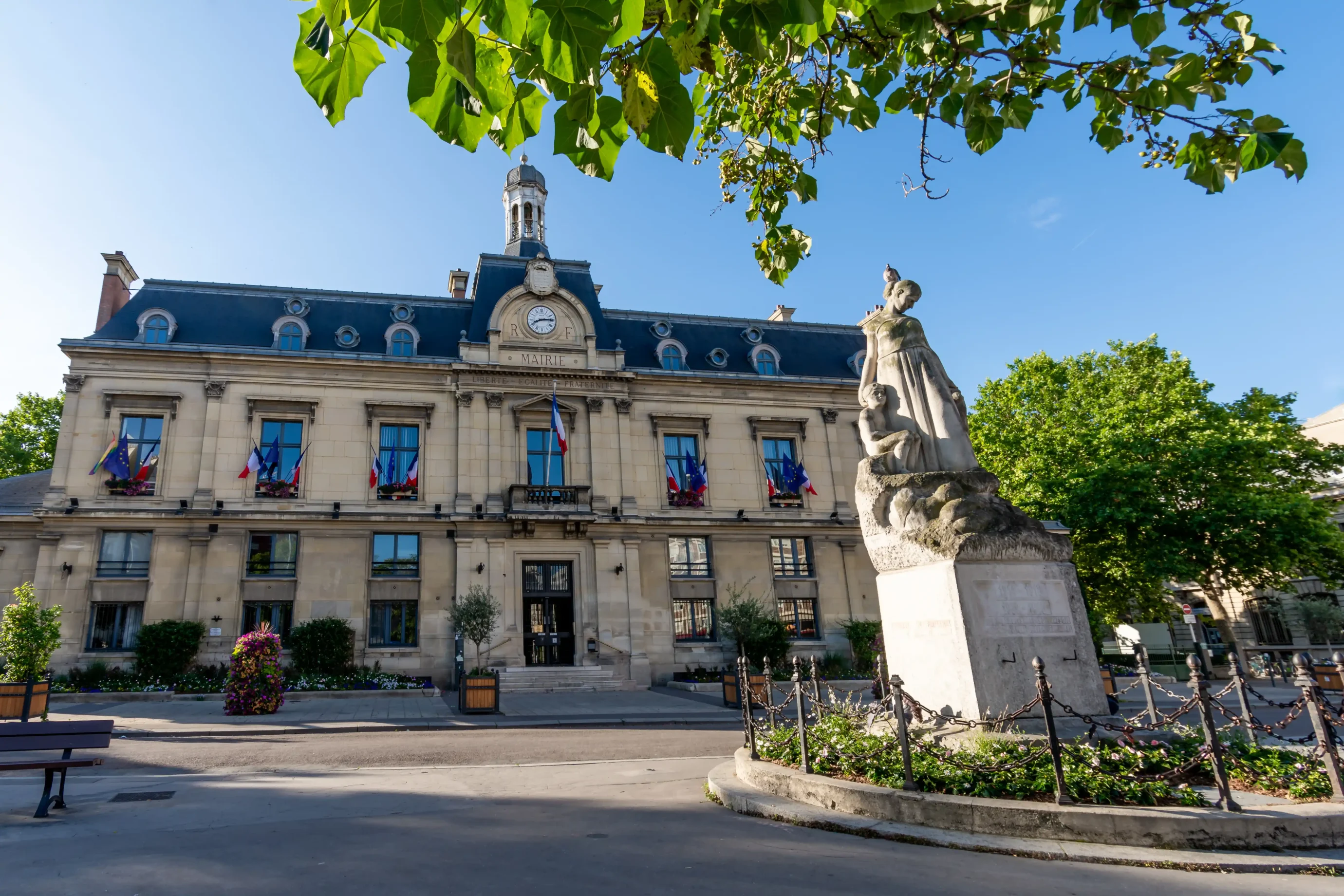
Strategically set around the central station, this neighborhood naturally serves as the city’s true beating heart. The large square facing city hall has been fully pedestrianized to provide a safe space for people walking through. It’s a dense, dynamic area, well maintained by the municipality, and it moves to the rhythm of city life. Living in this central area means having all essentials within a few minutes. You’ll find most administrative services, large supermarkets, gyms, and local cinemas. It’s the ideal location if you want to live without needing a personal vehicle.
Key highlights:
- Vibe: urban, lively, and very central, with a lot of daytime foot traffic.
- Main advantage: the transport hub connecting metro lines 13 and 14.
- Best for: people who prioritize efficiency and quick commutes to school.
Debain–Michelet–Bauer neighborhood
This pleasant residential area stretches along a major commercial avenue, close to the gates of Paris and Clichy. It has a much calmer, more peaceful atmosphere, protected from the bustle of the city’s busiest hubs. It’s a great option if you want quiet conditions for studying.
The local housing stock is varied, with a balanced mix of small buildings and townhouses. The neighborhood provides easy access to the antiques markets while still guaranteeing quiet nights for residents. Rents in this area are generally moderate compared with other parts of the city.
Key highlights:
- Vibe: quiet and fairly family-oriented, away from major crowds.
- Main advantage: immediate proximity to the famous flea market and Paris city gates.
- Best for: students looking for a good balance between peace and quick access to shops.
Arago–Pasteur–Zola–Hugo neighborhood
Built mainly around Boulevard Victor Hugo and Rue Émile Zola, this district is going through a major urban transition. This former industrial hub is being completely reinvented through a large renovation project led by the municipality. Old warehouses are gradually being replaced with modern buildings and well-integrated student residences.
The neighborhood is drawing a younger, more dynamic population thanks to its close proximity to Saint-Denis. More bike lanes, small squares, and new local shops are appearing every month to improve residents’ comfort. It’s a promising up-and-coming area where rental prices are still very affordable.
Key highlights:
- Vibe: in transition, industrial in places, modern in others.
- Main advantage: lower rents and more attractive flatshare opportunities for young people.
- Best for: students looking to optimize their housing budget near Paris.
Centre-Ville–Cordon (east and north sections)
These areas together form one of the more traditional and working-class sections of Centre-Ville–Cordon. They stand out for authentic local life, where long-time residents meet daily in small neighborhood shops. The atmosphere is supportive, warm, and deeply rooted in the city’s social history.
The local housing market offers some of the city’s lowest and most competitive prices per square meter. That said, some side streets or still-industrial pockets can feel a bit more isolated after dark. It remains an interesting area for finding larger apartments or planning flatshare projects on a tighter budget.
Key highlights:
- Vibe: traditional and authentic, with strong daytime local life.
- Main advantage: some of the most affordable prices per square meter in the city.
- Best for: people looking for budget-friendly housing in a traditional area.
Which neighborhoods should you choose to live in Saint-Ouen?
Choosing your future neighborhood will mainly depend on your profile and what you’re looking for.
Best neighborhood for families
If parents are looking for a calm environment for children, Arago–Pasteur–Zola–Hugo is often seen as the best neighborhood in Saint-Ouen. More residential, it offers a reassuring living environment with a complete school offering, from primary school to high school. You’ll find pretty houses and quiet family residences. Streets are wider, and the atmosphere is peaceful. Near the church, families enjoy a real village feel.
Ideal neighborhood for singles, young professionals, or students
For young adults (around 17–24), atmosphere and quick transport access are the top criteria. Garibaldi – Les Puces and Les Docks are perfect for that. The first offers intense cultural life and more affordable rents. The second offers unmatched modern comfort with sports facilities and coworking spaces. Plus, being close to Clichy widens your options for going out. These areas have a distinctly student-friendly, dynamic feel.
Investing in Saint-Ouen: the most promising neighborhoods
Local real estate has risen sharply in recent years, but opportunities remain real for families. If you want to buy a studio for a child, Plaine Commune’s momentum is a strong argument. Buying near a school or a key station helps ensure strong rental demand. Areas undergoing urban renewal show excellent potential for value growth in the medium term. To optimize your project, check out our tips for finding student housing in Île-de-France as well as our complete guide to successful flatsharing.
Living in Saint-Ouen: advantages and specifics by neighborhood
The vibe and everyday life in each neighborhood
Living here means adopting a village-like lifestyle while staying connected to the buzz of Paris. On Saturday mornings, Place de la République is bustling with market stalls. In the evening, young people gather in trendy bars near Stade Bauer, a historic venue for fans of grassroots football. The contrast is striking with the calm of the Seine riverbanks in Les Docks, where people come to find serenity.
Services and facilities available by neighborhood
The municipality has put a lot of effort into equipping each area of the city. Whether you live near the old château or closer to Debain–Michelet–Bauer, you’ll always find a sports facility or a library nearby. Public transport coverage is one of the biggest strengths in the north of the region:
- Metro line 14 crosses the city and gets you to the center in under 15 minutes.
- Metro line 13 provides efficient access to Saint-Lazare station and northern Paris.
- Many bus lines make cross-town trips easy.
Planning your move to Saint-Ouen: practical advice
Even though the city has become much calmer overall, it’s still wise to be cautious when choosing an address. Some more isolated areas, such as the northern industrial zone or certain side streets around Arago–Pasteur–Zola–Hugo and Centre-Ville–Cordon, may have some disturbances or local trafficking at night. If you’re looking for absolute quiet, these can be the kind of areas to avoid in Saint-Ouen.
Several local press articles point this out, including a report from Le Parisien highlighting renovation gaps between the ultra-modern Les Docks and older housing estates such as Charles Schmidt. Sometimes the atmosphere around Rue Albert Denis is mentioned. Many parents also find modern student residences with an on-site manager reassuring.
Practical guide: how to visit a neighborhood like a pro
To validate your apartment choice and avoid mistakes, it’s essential to investigate on the ground:
- Step 1: Test your future commute using the metro or RER during morning rush hour.
- Step 2: Walk within a 10-minute radius around the building to locate the school, bakery, and local town hall.
- Step 3: Come back in the evening to assess street lighting, noise levels, and overall calm from Centre-Ville–Cordon to the areas around the château or the church.
FAQ: everything you need to know about Saint-Ouen’s neighborhoods
Les Docks is a standout choice if you’re looking for modern, eco-friendly buildings and large green spaces along the Seine. For a more traditional and lively atmosphere, Garibaldi – Les Puces and Centre-Ville–Cordon remain excellent and very popular options. Many people love being close to the town hall shops and café terraces that energize everyday life.
Les Docks and Garibaldi – Les Puces attract most students moving into the area. You’ll find functional multi-room apartments, coworking spaces, and a rich cultural offer close to Paris. And being well served by metro lines 13 and 14 means you can reach your school or university in record time.
Although the city is transforming rapidly thanks to major urban projects, Centre-Ville–Cordon, Arago–Pasteur–Zola–Hugo, and Debain–Michelet–Bauer are sometimes described as more sensitive. Some noise disturbances or local trafficking can occur after dark, which may make them areas to avoid in Saint-Ouen for people seeking absolute calm. Local articles often advise sticking to main roads such as Boulevard Victor Hugo or Rue Bauer to move around more comfortably.
Reviews of Garibaldi – Les Puces are very positive: people love its authentic, friendly feel. The famous flea market brings a unique artistic and bohemian touch that’s especially appreciated by a younger crowd. It’s a very lively area, well connected to Paris and to Clichy, with plenty of affordable restaurants for students.
Debain–Michelet–Bauer offers a more traditional, calm, residential setting, with property prices often more accessible than in new builds. Residents appreciate the nearby shops on Avenue Michelet and the charm of small houses typical of Vieux-Saint-Ouen. It’s a great option if you want to live away from noise while staying close to the metro and the historic church.